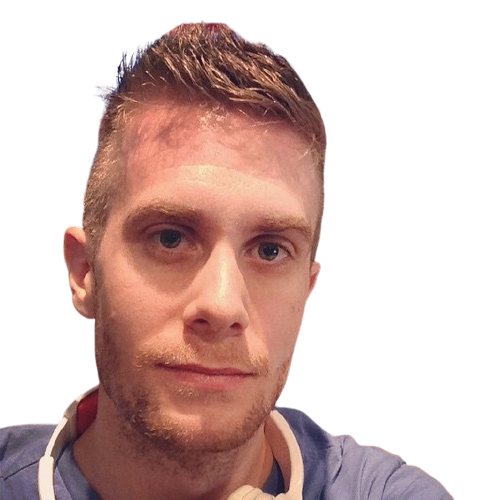
Elon Musk and the OpenAI boss have spent the last three weeks battling in court over Sam Altman's company, in a trial that could mould the future of artificial intelligence.
After listening to bitter testimonies and heated exchanges, the jury has now gone to deliberate on their verdict.
Read more: Musk v Altman - the tech titans' battle
It all centres around the founding principles of OpenAI.
Back in 2015, Mr Musk and Mr Altman were two of the company's co-founders, who created a non-profit to research AI and advance it in a way "that is most likely to benefit humanity as a whole" while "unconstrained by a need to generate financial return".
Despite being a co-founder, Mr Musk quit as the co-chair in 2018.
Mr Musk alleged Mr Altman has strayed far from that founding principle.
He now wants more than $134bn in damages - although the funds won't go to him personally - as well as the removal of Mr Altman and OpenAI's president Greg Brockman and the scrapping of some OpenAI deals with its biggest investor, Microsoft.
The jury's decision will come as three of the world's biggest AI companies, xAI, OpenAI and Anthropic, all move towards listing on the stock market.
So what were the key takeaways from the final moments in court?
Elon Musk might be too late
The jury will have to decide if Elon Musk has been too slow to bring his case to court, as a lot of his complaints relate to the early days of OpenAI.
Mr Altman's team say he should have filed his complaints by 2021 at the latest if he wanted to sue.
Last month, the judge wrote in a court filing, "if the jury finds that Musk failed to file his action within the statute of limitations, it is highly likely" that she will "accept that finding and direct verdict to the defendants."
If the jury decides the lawsuit was filed in time, it will then have to decide if OpenAI's executives broke the company's "charitable trust" and whether Sam Altman and Greg Brockman, OpenAI's president and co-founder, have unjustly enriched themselves at Elon Musk's expense.
OpenAI says Musk just wants control
Lawyers for both billionaires told the jury they had proved the other side can't be trusted.
Because no contract was written in the early days of the company to formalise OpenAI's "charitable trust", Mr Musk's side has used emails, interviews and even OpenAI's website to persuade the jury that such a trust existed.
He claims that trust was broken when OpenAI announced plans to become a profit-making enterprise, even though it said that would help its mission to benefit humanity.
Read more from the trial:
Sam Altman insists he's trustworthy
Musk says Altman tried to 'steal' charity
But Sarah Eddy, one of OpenAI's lawyers, said it was Musk who misrepresented details surrounding OpenAI's nonprofit founding and his subsequent falling out with the other co-founders.
"Mr Musk, he has tried to persuade you that his years-ago donations to OpenAI came with specific strings attached, that these strings were strong enough to last forever to tie OpenAI up in knots as it tries to pursue its mission, and that these strings gave Mr Musk perpetual rights over OpenAI," Ms Eddy said.
"But Mr Musk has come nowhere close to making that case."
Instead, she argued that Mr Musk wanted to keep complete control over artificial general intelligence, a term for AI that can perform better than humans, and noted that at one point, he proposed merging OpenAI into Tesla.
"That's why this was such a high-stakes conversation. Mr Musk wanted total control."
Musk's side says Altman just wants to get rich
Steven Molo, the lawyer for Elon Musk, told the jury that five witnesses under oath had called Mr Altman a liar. He compared Mr Altman's track record to a rickety bridge.
"If a bridge was built on Sam Altman's reputation for telling the truth, I don't think you'd cross that bridge," he said.
He also attacked Mr Altman and Mr Brockman for getting rich off the organisation, noting in particular Mr Brockman's nearly $30 billion stake and Mr Altman's investments in companies that have made deals with OpenAI.
He compared their financial gains to a bank robbery, although this was later contested by one of OpenAI's lawyers.
"Has anyone heard of a bank robbery where the bank robbers invented the bank, created $200 billion of value and put all the money into the bank?" said Bill Savitt.
Outside court, protesters crticised the entire case, with some even lobbying for a ban on artificial intelligence.
"Both parties in this trial are completely hypocritical. They both claim that they're developing AI for the benefit of humanity and that's a lie. They're developing it for greed," said Phoebe Thomas Sorgen, a peace activist.

(c) Sky News 2026: Final moments of Altman v Musk trial as jury decides fate of AI titans
 Two pupils from different schools in Reading treated for meningitis after student from Henley College dies
 Teenage e-bike rider jailed for over six years for killing great-grandmother at zebra crossing
 Five Italians die while exploring underwater caves in the Maldives
 Video shows prisoner accused of murdering Lostprophets singer Ian Watkins asking to play Sudoku after attack
 Southport stabbing survivor 'horrified' at victims' records being accessed by 48 hospital staff
 Sir David Beckham and the Gallagher brothers among the biggest winners in 2026 Sunday Times Rich List
 Man arrested on suspicion of murder after 65-year-old woman's body found
 BT revives talks with rivals over partnership for struggling Global unit | Mark Kleinman blog