Experts who advise the government on drug-related issues in the UK have said that ketamine should not be reclassified as a Class A drug.
Currently a Class B substance, ketamine is used in clinical settings as an anaesthetic for people and animals - but it is also taken recreationally, usually as a crushed powder.
Last January, the government announced it would seek expert advice on reclassifying ketamine, after illegal use of the drug reached record levels in the year ending March 2023.
The Advisory Council on the Misuse of Drugs (ACMD) published its findings on Wednesday, stating its recommendation to keep the drug a Class B was "by no means a unanimous decision".
The ACMD is an advisory non-departmental public body, sponsored by the Home Office.
It is made up of experts, including academics, as well as members of law enforcement and the medical profession.
In the report, it found "that possible advantages of reclassifying ketamine were outweighed by the disadvantages".
According to the ACMD, those disadvantages include concerns that reclassification could potentially increase the stigma around ketamine, meaning people would be less likely to seek addiction support.
It also concluded that "increased enforcement activity associated with Class A status could result in higher prices, increased risk of adulteration of supplies and more income-generating crime".
Over the course of the last 12 months, the ACMD heard from a number of contributors.
It said individuals with lived experience of ketamine use and the harms of the drug said they did not believe upgrading the drug would reduce its use, while social care professionals also largely voiced their opinion in favour of reclassification.
Read more:
The drug addiction leaving users in chronic pain
In a special report last year, Sky News spoke to people whose lives were impacted by the drug and the people trying to support them.
Former ketamine users told us how the drug had left them in chronic, life-changing pain.
As part of that report, we filmed at Birchwood, a rehabilitation facility on the Wirral in Merseyside. The week before we were there, 14 out of 25 beds were taken up by ketamine users.
The manager, Jo Moore, has read the ACMD findings, and is in favour of a multi-agency approach that the experts have recommended.
"When I look at the recommendations, I can see there's a huge amount of detail that will help and support people moving forward, and I think that's the focus here," she said.
Ketamine 'carnage'
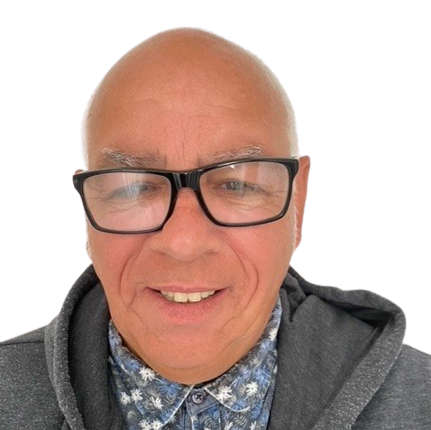
Today we also spoke to Jack Curran, a former ketamine user who says the drug "caused carnage," in his life.
He now supports people with their own recovery journeys. He says for him and the people he works with, more resources being put into rehabilitation services, rather than reclassifying the drug, would have been more helpful.
"I never ever thought, oh my God, I'm not going to touch Class A's because of the punishment or for the status of it being Class A," he told me.
"Ketamine was the thing that brought me to my knees, and if it was Class A, it still would have done the same job, I still would have used it.
"In my experience, all I needed was support, and to find some sort of recovery through rehabilitation, I didn't need punishment. I was struggling with an illness of addiction."
Although it did not conclude in favour of reclassifying the drug, the ACMD pushed for a public health "whole systems" approach to ketamine to reduce the harms caused by the drug, arguing that the "availability of co-ordinated services for people, and in particular for children and young adults with ketamine use disorders, remains inadequate".
It also found that police forces and health care professionals must receive greater support to better identify, prevent and respond to ketamine‑related harms.
Although it stopped short of suggesting reclassification, the ACMD made a number of recommendations around ketamine.
These included the UK government identifying which countries the largest amounts of illegal ketamine come from, and having discussions with their governments on how the supply can be reduced.
It also made recommendations around testing, including expanding roadside testing for the drug as well as including ketamine in drug testing when people are arrested to help understand the link between the drug and criminality as well as helping to signpost people to support.
The ACMD also suggested that ketamine be included in data collected by health services, including ambulance services, emergency departments and urology clinics.
Reacting to the news on Wednesday, bereaved parents whose children died due to ketamine use expressed their disappointment.
In a reminder of how the debate around this drug will only continue, they called the report "a lean-to education without a plan or funding".
They added: "Without clear, or urgent, properly-funded action, those words risk becoming just that: words."
The Home Office will now consider the report before responding.
A spokesperson for the department said: "Ketamine is an extremely dangerous substance and the recent rise in its use is deeply concerning.
"We are grateful to the Advisory Council on the Misuse of Drugs for publishing their assessment. We will now consider the report carefully and respond as a matter of priority."
With additional reporting by Ella Griffith, North of England Producer

(c) Sky News 2026: Ketamine should not be reclassified as a Class A drug, say experts
 ICE agents involved in fatal Minneapolis shooting of Alex Pretti 'placed on administrative leave'
 Dame Sarah Mullally makes history as she's confirmed first female Archbishop of Canterbury
 King Charles speaks of backlash he suffered due to his environmental campaigning in new documentary
 Tributes paid to British Army officer killed during live firing training exercise
 Ex-Spandau Ballet singer Ross Davidson found guilty of rape and attempted rape
 Man guilty of assaulting woman after Barron Trump alerted police
 Man dies after lorry crashes into river in New Forest during Storm Chandra
 Retired engineer Kevin Rees convicted of blowing up ULEZ camera with homemade bomb