
Watching Donald Trump's approach to Ukraine swing from support to public criticism and, at times, outright hostility, I couldn't help wondering whether Theresa May belongs to a different era of political leadership.
Not simply because she served before Brexit had fully reshaped Britain's place in the world or before Trump returned to the White House, but because she came of age politically at a time when the foundations of Western foreign policy felt more settled. NATO was rarely questioned.
America's leadership of the alliance was largely taken for granted. International institutions still carried authority. Today's world feels markedly different.
There are few British prime ministers who have looked Vladimir Putin in the eye quite as she has.
The Salisbury poisonings transformed Britain's relationship with Russia overnight, forcing May to confront the Kremlin at one of the most dangerous moments in recent history.
She also spent years working alongside President Trump during his first term in the White House. Few leaders have witnessed so many of the events that continue to shape today's geopolitical landscape.
As I sat opposite her this week, I wanted to know whether those experiences had changed the way she sees Russia, America and the future of the Western alliance - or whether they had simply confirmed what she believed all along.
If anything, they had.
I asked whether another Salisbury-style attack today would provoke the same united response from Britain's allies.
There was no hesitation.
While she acknowledged there were moments when Moscow may have sensed divisions beginning to emerge within the West, Russia's full-scale invasion of Ukraine changed that calculation. If Putin believed democracies lacked the resolve to stand together, she argued, 2022 proved otherwise.
Unsurprisingly, Ukraine dominated much of our conversation. Given President Trump's often unpredictable approach to Kyiv, I asked whether she believed Ukraine could still rely on the United States.
Her answer wasn't really about Donald Trump. It was about Europe.
For years, Trump has argued that European nations should shoulder more of the burden for their own defence. On that point, May believes he has been remarkably consistent. Her message to Europe was unmistakable: the continent can no longer assume the United States will always carry the burden of its security.
The moment that stayed with me, though, came when I asked what advice she would give today's leaders dealing with Putin.
She smiled briefly before replying. "Once a KGB man, always a KGB man."
It was classic Theresa May. Just a sentence that distilled years of dealing with Putin - and a reminder that, in her mind, Russia's strategic ambitions have not changed, even if the world around it has.
Read more:
Europe threatens to boycott World Cup over FIFA plans
Suffolk fire grows as wind makes spread 'difficult to predict'
I also wanted to know how she believes this war ends. Negotiations, she said, will almost certainly come. But they cannot come at the price of rewarding Russian aggression. Russia cannot be allowed to emerge victorious.
For May, the question is larger than Ukraine itself. It is whether countries can still rely on collective security and whether borders can once again be changed by force without consequence.
If Ukraine dominated the first half of our conversation, Iran shaped the second.
What struck me was her empathy for ordinary Iranians - people she said simply want the opportunity to live peacefully in a democratic country.
At the same time, she warned of Tehran's increasingly close relationship with Moscow and stressed the strategic importance of keeping the Strait of Hormuz open, a reminder of how quickly instability in one region can reverberate across the global economy.
Our conversation ended with Gaza. May reaffirmed her long-held belief that a two-state solution remains the only credible path forward, despite how distant that prospect now appears. It feels more elusive than ever, I suggested. She didn't disagree. But neither had she abandoned hope.
Politics, she reminded me, is ultimately about choices. With sufficient political will, even today's seemingly intractable conflicts can still be resolved.
As we wrapped up the interview, I found myself returning to the question I'd asked at the very beginning. Is May a politician from a different era?
Perhaps.
But after an hour with her, I found myself thinking that consistency - so often dismissed as caution in politics - can also be a form of leadership.
May belongs to a generation of leaders who largely shared the same assumptions about alliances, diplomacy and the role of the West in the world.
Today, many of those assumptions are being tested, not only by Russia and China but increasingly from within the alliance itself. Whether discussing Putin, Trump, Iran or Gaza, her worldview never shifted.
Democracies, she believes, are strongest when they work together. In an age of disruption and uncertainty, that conviction feels less like nostalgia and more like a challenge to the leaders who have followed her.

(c) Sky News 2026: 'Once a KGB man, always a KGB man': Why Theresa May's view on Russia hasn't changed in a wor
 UEFA agree to boycott World Cup if FIFA approves tournament sell-off plan - as CONCACAF reject proposals
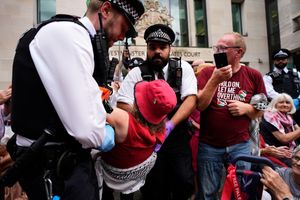 Palestine Action terror ban to go to Supreme Court as 117 arrested at protest
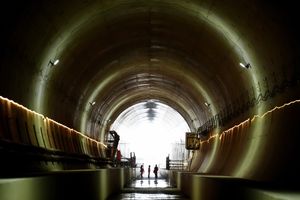 Key HS2 contracts renegotiated as government scrambles to slash costs
 Police find £4m in cash and 1kg of cocaine at south London property after stopping suspicious vehicle
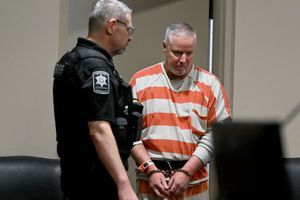 Father who gifted gun to son before he carried out deadly high school shooting jailed for 15 years
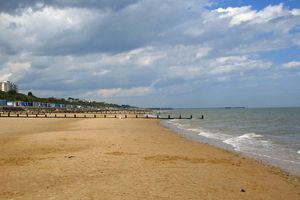 Man dies after getting into difficulty in sea off Essex coastal town
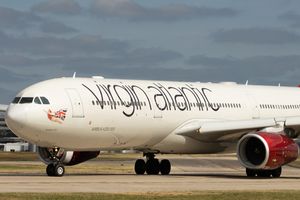 Aircraft engineer died after Heathrow explosion, inquest hears
 The Maradona effect: Bank of England's banking on markets to prevent rate hikes