
Ministers will introduce reforms so that children with special educational needs (SEND) will have their support reviewed as they move from primary to secondary school.
The move is one of the key changes that will be introduced to reform the SEND system by Education Secretary Bridget Phillipson, as part of a wider package of measures, Sky News understands.
The full details of the proposals are expected to be revealed on Monday, when parliament returns from recess.
Politics latest - follow live
But one of the key planks of the reforms will be reducing the reliance of children with SEND on Education Health and Care Plans (EHCP).
What are EHCPs, and what's the problem with them?
These plans are legally binding and support children and young adults up to the age of 25. But the number of people with them has nearly doubled since 2017.
It is due to rise further by the end of the decade - putting huge financial pressure on local authorities, who fund special needs provision.
The increase has also led to long waiting lists, while unhappy families who initially fail to get the plans are increasingly going to court to overturn that decision - with 99% of appeals accepted in 2023.
But the County Councils Network says that for all their cost and effort, EHCPs aren't actually improving educational outcomes, and the system needs "root and branch" reform to stop councils being pushed to the financial brink.
The government appears to have also come to the same conclusion, as one of the main reforms to the SEND system will see children with EHCPs reassessed as they move from primary to second school.
It is expected that this will reduce the number of children relying on EHCPs. Government figures show around 19% of children currently get the plans between age 10-11, as they transition from primary to secondary school.
Sector sources previously suggested EHCPs could be limited to only children with the most severe needs, but it is not clear if the elements leaked today are a departure from that plan or part of it.
New form of SEND plan to be introduced for some
As first reported by the BBC, children who don't get EHCPs but have extra needs, will get a new identified special educational needs plan or Individual Support Plan (ISP) from their school.
It is understood that the ISPs will have some sort of legal protection. However, if these plans are written by schools, it is not clear who parents would appeal to if they are not happy.
Government sources have insisted that this is not about taking rights away from people, and that no child would lose a place in a special school once they have one.
The idea is that mainstream schools will take on more of the responsibility for moderate special needs provision, rather than local authorities. However, it is not clear how they will be funded to do so.
No changes are expected to come into place for 2029, so it may be that there are no changes at all before the next general election.

(c) Sky News 2026: Pupils with SEND to have support reviewed when they join secondary school
 What is misconduct in public office?
 British couple sentenced to 10 years in prison in Iran, family say
 Gorton and Denton by-election: It's the UK's first crucial vote of the year - and something striking seems to be happening
 How US military is assembling within striking distance of Iran
 Bill Gates withdraws from Indian AI Impact Summit
 'Prolific waste criminal' ordered to pay £1.4m for illegal dumping at 16 sites
 Police launch manhunt after woman stabbed several times in Coventry
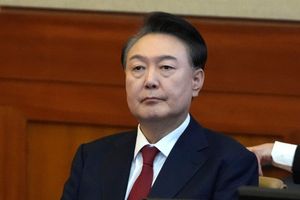 Former South Korean president Yoon Suk Yeol handed life sentence after declaring martial law in 2024