

Sky's Data and Forensics team has been monitoring shipping through the Strait of Hormuz - a strategically vital waterway for Iran and other oil producers in the Middle East.
Maritime activity has been almost brought to a standstill as the US and Iran have traded strikes.
Hundreds of tankers are usually travelling through the Strait of Hormuz between Persian Gulf and the Gulf of Oman at all times, with Iran to the north and Oman and the United Arab Emirates to the south. It's the only marine outlet for this region's main oil producers including Iran.
In 2024, around a fifth of all global oil was flowing through the narrow waterway - the equivalent of 20 million barrels a day.
A snapshot from a month ago on February 1 shows how busy the waterway is with vessels passing into and out of the waterway.
On February 28, the day after the US and Israel carried out their first strikes on Iran, far fewer vessels were in the area and very little movement. By March 1, very few ships were in the straight, and vessels appeared to cluster around large ports either side of the strait.
Sky's Data and Forensic team tracked several individual tankers. One - the KHK Empress - was already in the strait before turning back on Saturday at around 10:00 AM UTC. By Saturday evening, 4 others had turned away from the strait to head back out into the Gulf. And by Sunday they were all on the move out of the region.
Analytics agency Kpler estimates that these five ships have the capacity to carry around 10 million barrels of oil.
Fear of being targeted on the route are not unfounded. On March 1, a Palau-flagged oil tanker 'The Skylight' was attacked. Four people were injured and the whole crew of 20 people was evacuated.
The US navy is warning against navigation through the strait and some traders are suspending transit.
And interference to the ship tracking and communication system, AIS, is making the area even more dangerous. The images below show AIS signals, which ships use to broadcast their locations, on February 27 compared to 28 February.
The later image shows distorted signals, with ships broadcasting locations that appear to be far from their true positions, or even on land.
Volatility in the Gulf will have an impact across the world. Disruption here will in turn disrupt global markets and international trade.

(c) Sky News 2026: Ship tracking reveals tankers and millions of barrels of oil stuck in the Gulf
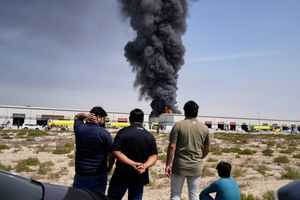 A single Iranian missile penetrating US defences could throw Trump off course
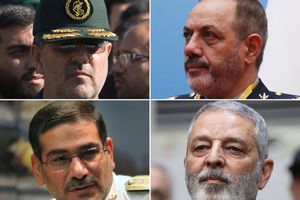 Which Iranian officials have been killed, who's in charge now - and who will be its new leader?
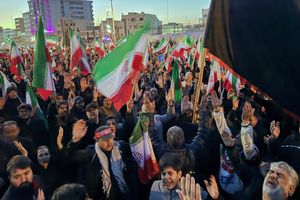 Iran's regime looks vulnerable - but clerics and their supporters still control the streets
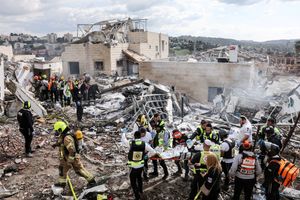 The horror story at Beit Shemesh where an Iranian missile evaded Israel's formidable defences
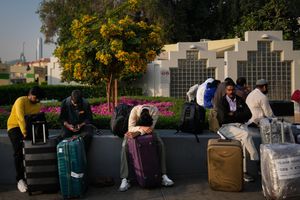 Trump's war with Iran has become personal for people in Dubai
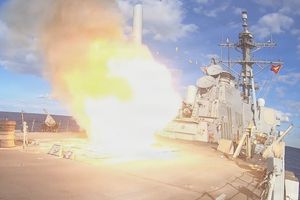 What we know so far about US-Israeli strikes and retaliatory attacks by Iran
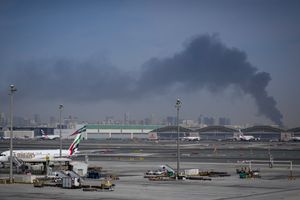 Almost 100,000 Brits stranded as Iranian strikes force airports to close including Dubai and Doha
 UK terror threat 'absolutely' under review after Iran strikes, defence secretary says