Israel will be allowed to compete in next year's Eurovision Song Contest, organisers have said - with several broadcasters saying they will now boycott the event.
Dutch broadcaster AVROTROS, Spain's RTVE, Ireland's RTE and Slovenia's RTV immediately issued statements saying they will not participate in the 2026 contest following the European Broadcasting Union's general assembly meeting on Thursday.
Members were asked to vote in a secret ballot on whether they were happy with tougher new rules announced last month, without going ahead with a vote on participation next year. It followed criticism from some broadcasters of Israel's role in Eurovision amid the war in Gaza, and allegations this year's vote had been manipulated in favour of their contestant.
In a statement, the EBU, which organises Eurovision, said members had shown "clear support for reforms to reinforce trust and protect neutrality".
Golan Yochpaz, chief executive of Israel's public broadcaster KAN, said during the meeting that attempts to remove them from the contest could "only be understood as a cultural boycott", according to a statement shared by the organisation.
Israel's president Isaac Herzog posted on X following the announcement, saying: "Israel deserves to be represented on every stage around the world, a cause to which I am fully and actively committed... I hope that the competition will remain one that champions culture, music, friendship between nations, and cross-border cultural understanding."
Boycott announcements - what have broadcasters said?
The broadcasters from Spain, Ireland, Slovenia and the Netherlands had all said earlier in the year that they would not participate in 2026 should Israel be allowed to continue in the competition.
In a statement following the general assembly meeting, RTE confirmed it will not take part or broadcast the competition.
"RTE feels that Ireland's participation remains unconscionable given the appalling loss of lives in Gaza and the humanitarian crisis there which continues to put the lives of so many civilians at risk," the broadcaster said.
AVROTROS, broadcaster for the Netherlands, said that "under the current circumstances, participation cannot be reconciled with the public values that are fundamental to our organisation".
General director Taco Zimmerman said it had not been an easy decision, adding: "Culture unites, but not at any price. What has happened over the past year has tested the limits of what we can uphold."
Confirming its withdrawal, Spain's RTVE highlighted how its board of directors had agreed in September that the country would withdraw "if Israel was part of it".
This is a big deal for Eurovision, as Spain is one of the "Big Five" broadcasters - a group which also includes France, Germany, Italy and the UK. While the host broadcaster - as last year's winners this is Austria this year - will often contribute most towards the cost of staging the contest, the Big Five will also make up a significant amount.
Slovenian broadcaster RTV said it was pulling out of the competition "on behalf of the 20,000 children who died in Gaza".
In her address to members before the decision, Natalija Gorsck, RTV Slovenia board chairwoman, said: "For the third year in a row, the public has demanded that we say no to the participation of any country that attacks another country. We must follow European standards for peace and understanding.
"Eurovision has been a place for joy and happiness from the very beginning, performers and audiences have been united by music, and it should remain that way."
Eurovision 'is for broadcasters, not governments'
But Austria's broadcaster ORF said it was happy with the decision and is looking forward to hosting next year.
Roland Weissman, ORF director-general, said the contest was a competition for broadcasters, "not governments", and that he had personally advocated for Israel's participation.
"In the spirit of fostering cultural dialogue and supporting and strengthening the democratic role of public broadcasters, it was important not to burn any bridges," he said, adding that concerns raised by some members had been taken seriously.
"Naturally, I would regret it if broadcasters were to decide against participating," he added. "I see the Eurovision Song Contest in Vienna as an opportunity to emphasise what unites us rather than what divides us - United by Music."
Politics has always played a part in Eurovision, despite the EBU's insistence that it remains politically neutral.
Countries have pulled out or been banned in previous years - most notably Russia in 2022, just days after the invasion of Ukraine.
But this exodus could be Eurovision's biggest political crisis yet.
The BBC, which broadcasts the competition in the UK, said it suppoeted the collective decision. "This is about enforcing the rules of the EBU and being inclusive," it said in a statement.
Earlier this year, outgoing BBC director-general Tim Davie said the corporation was "aware of the concerns" raised, but the song contest had "never been about politics".
How have the rules changed?
In November, the EBU announced it was changing its voting system. This followed allegations of "interference" by Israel's government earlier this year.
The rule changes annnounced in November came after Israeli singer Yuval Raphael received the largest number of votes from the public at the 2025 event, held in Basel, Switzerland, in May - ultimately finishing as runner-up to Austria's entry after the jury votes were counted.
But a number of broadcasters raised concerns about Israel's result.
Key changes to next year's competition include:
• Clearer rules around promotion of artists and their songs
• Cap on audience voting halved
• The return of professional juries to semi-finals
• Enhanced security safeguards
It was these changes members were secretly balloted on at the general assembly. With a "large majority" voting that they were happy with these changes, the EBU said there was no need for a further vote on participation.
Speaking after the discussion, EBU president Delphine Ernotte Cunci said the result demonstrates members' "shared commitment to protecting transparency and trust in the Eurovision Song Contest, the world's largest live music event".
Thanking members for their "thoughtful, respectful and constructive contributions" during the session and throughout the year, she said these discussions had led to "meaningful changes" to the rules, ensuring the contest "remains a place for unity and cultural exchange".
This breaking news story is being updated and more details will be published shortly.
Please refresh the page for the latest version.
You can receive breaking news alerts on a smartphone or tablet via the Sky News app. You can also follow us on WhatsApp and subscribe to our YouTube channel to keep up with the latest news.

(c) Sky News 2025: Israel allowed to take part in Eurovision 2026 - as several countries withdraw
 Salisbury novichok poisonings: Putin 'morally responsible' for woman's death after authorising botched spy assassination bid
 Derby police evacuate around 200 homes as men arrested on suspicion of explosives offences
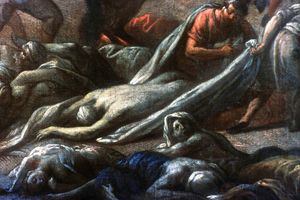 Volcanic eruption may have sparked Europe's Black Death plague, scientists find
 Four arrested in Eastbourne and Brighton in right-wing terror investigation
 Man charged over allegedly assisting Manchester synagogue attacker with reconnaissance of defence facility
 Anti-Hamas militia leader Yasser Abu Shabab killed in Gaza Strip - reports
 Impotent sanctions on Russia are no match for solid financial support to Ukraine
 Ukraine has become Europe's war - so why doesn't it act like it?