

About 150 tankers have dropped anchor in open Gulf waters on either side of the Strait of Hormuz, a crucial trading route on Iran's southern border.
This is leading to fears the waterway could be blocked, potentially causing a significant rise in oil prices.
What is the Strait of Hormuz?
The Middle East is the world's foremost oil-producing region, its waterways a critical thoroughfare for maritime trade.
That is particularly true of the Strait of Hormuz, which handles a fifth of the world's oil trade - or 21 million barrels a day.
The strait is a narrow passage that leads from the Persian Gulf into the Gulf of Oman and onto the Arabian Sea and the Indian Ocean.
It is about 100 miles long and just 24 miles wide at its narrowest point, bound by Iran in the north and by the UAE and Oman in the south.
Iran latest: Tehran seeks revenge for supreme leader's killing
Countries on the opposite side of the Persian Gulf to Iran - including the UAE, Kuwait, Bahrain and Qatar - produce a significant portion of the world's oil.
And yet the strait is the only way tankers carrying their oil can access to the rest of the world, making it one of the most strategically important choke points in global trade.
Blockades in the strait could push oil prices above $100 (£74) per barrel, Goldman Sachs analysts have previously predicted.
On Friday, prices were below $70 (£52) a barrel.
According to the International Monetary Fund, inflation in advanced economies rises by about 0.4 percentage points for every 10% increase in oil prices.
How could Iran close the Strait of Hormuz?
Analysts say there are multiple ways Iran could try to block access to the strait.
It has developed a "considerable array" of capabilities, including sea mines, fast attack vessels, submarines, drones and missile systems said Nick Childs, an expert in maritime security at the International Institute for Strategic Studies think tank.
He added: "If used in a comprehensive campaign, these could cause very significant disruption and also potentially seriously hazard US and other naval units including mine countermeasures vessels seeking to keep the waterway open."
Read more:
Dubai hotels hit during Iranian missile fire
How have Iranians reacted to death of supreme leader?
There is also the possibility that instead of closing the strait entirely, Iran could try to pursue a more targeted campaign of harassment against specific ships - perhaps Israeli, US or other Western vessels.
That said, it would be an extreme step for Iran to close the route, given it could anger its major customer, China, as well as Qatar and the UAE, two other major oil-producing states.

(c) Sky News 2026: Why the 24 mile wide Strait of Hormuz is so important in the war with Iran
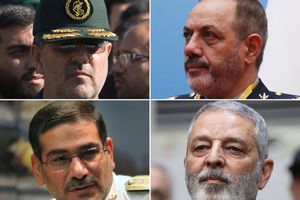 Which Iranian officials have been killed, who's in charge now - and who will be its new leader?
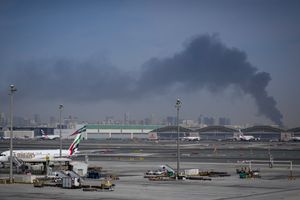 Thousands stranded as Iranian strikes force airports to close including Dubai and Doha
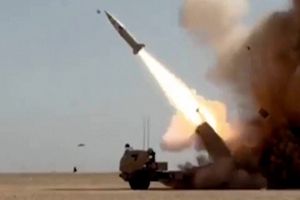 The US war against Iran marks a new era of conflict and peril
 At least three killed and 14 injured in Texas bar shooting with potential terror link
 Man arrested over fatal stabbing at Milton Keynes shopping centre
 'Russian shadow fleet' tanker seized in Belgian-French North Sea raid
 Footballers who cover mouths during on-pitch rows should be sent off, says FIFA boss
 UK terror threat 'absolutely' under review after Iran strikes, defence secretary says